

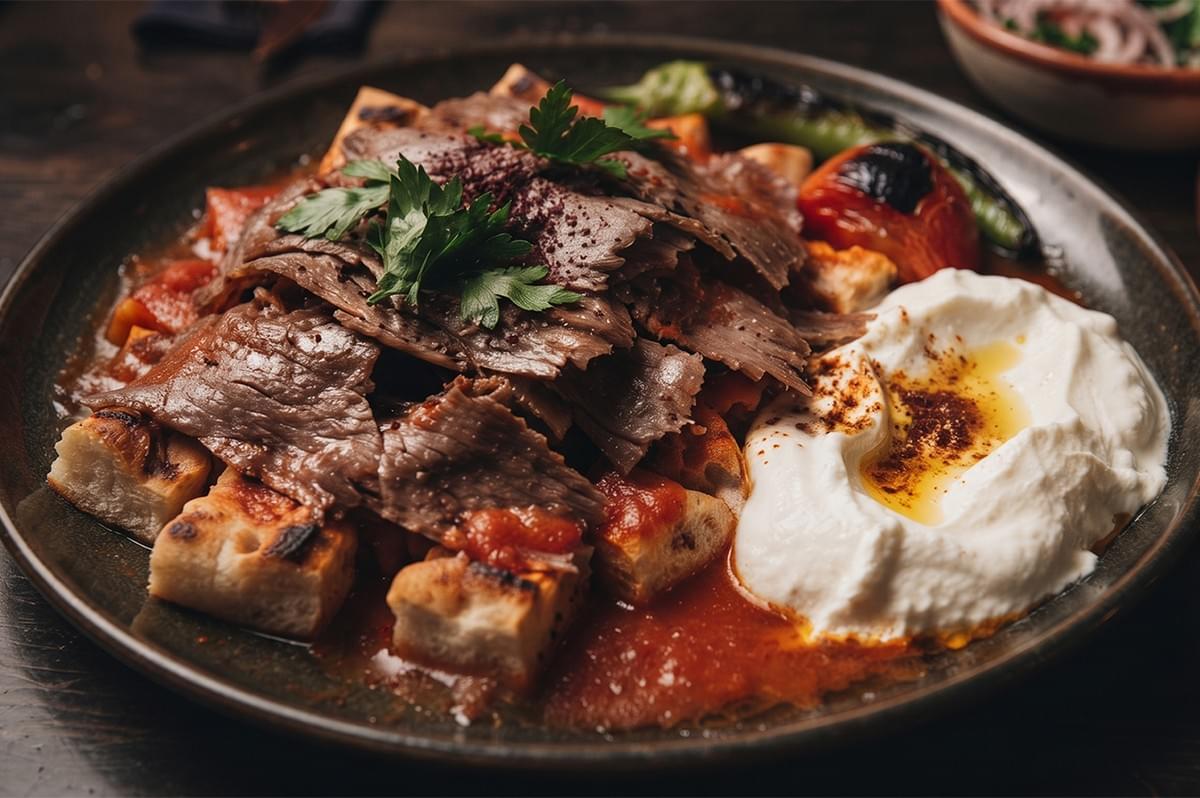
Picture the plate before anything else.
Soft pide bread cut into squares sits at the bottom. Thinly sliced meat slices lie over it, and warm rich tomato sauce soaks slowly into the bread. A cool spoonful of creamy yogurt waits on the side, its tangy yogurt flavor balancing the hot butter drizzle poured over everything at the table, making it a beloved halal food choice for many.
That's Iskender kebab, a signature dish and beloved Turkish dish. It isn't complicated, and it isn't trying to impress anyone. Each part has a job, and when they meet on one plate, the dish makes a lot of delicious sense.
It's also a dish with a name, a family, and a city behind it. That story is worth knowing before you pick up a fork.
Bursa Roots: The Story of İskender Efendi and the Original Recipe
What the family records say
The dish is tied to Bursa, a city in northwestern Turkey known for many restaurants serving authentic Turkish recipes. According to the İskenderoğlu family's history, the story begins in 1867. İskender Efendi opened his first shop beside Kayhan Mosque in Bursa's Kayhan Bazaar in 1867. The original premises operated for more than a century before The family moved the shop to nearby Ünlü Avenue in the 1960s.
The family's main website adds some background. İskender's father, Mehmet Efendi, was a tradesman known for butchery and meat preparation. So İskender grew up around meat and fire.
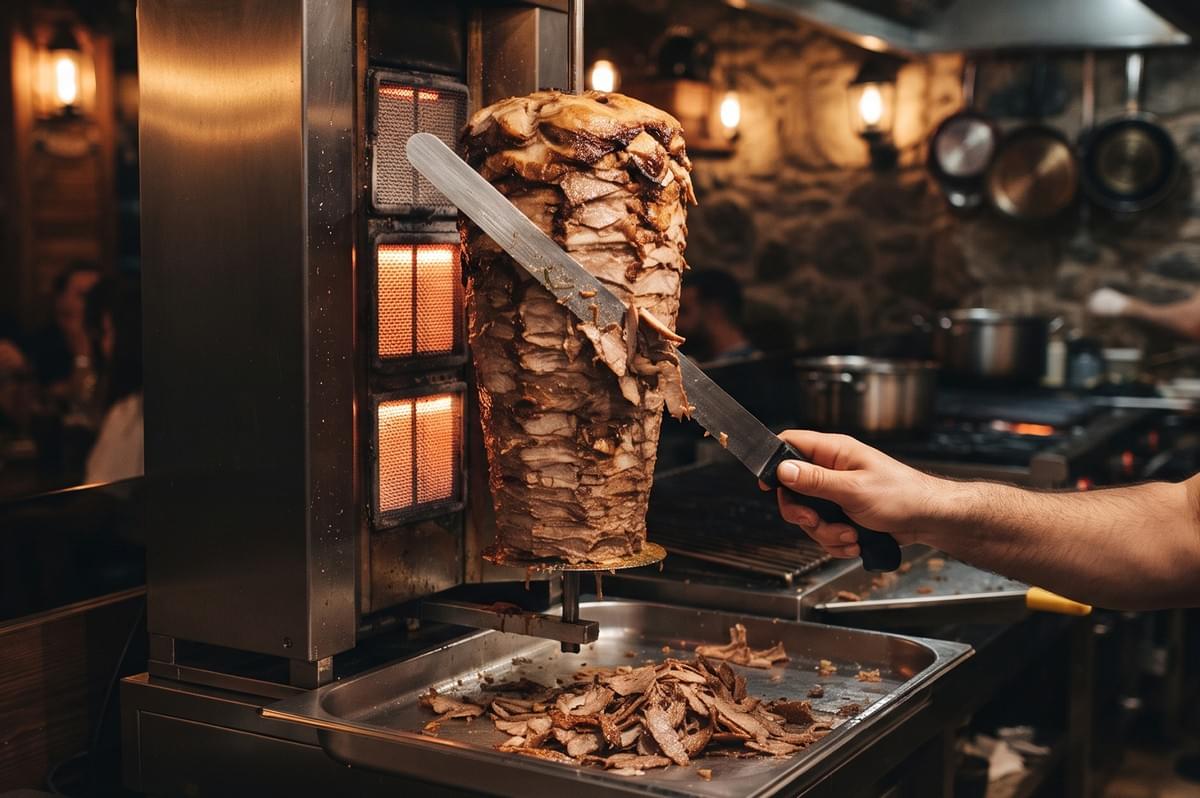
At the time, kebab meat was usually roasted whole on a horizontal spit over an open fire. İskender wanted every customer to get a fair share of the different cuts and their flavors. So he changed the method. He removed the bones and sinew, stood the meat on a vertical rotisserie, cooked meat slowly on the spit, sliced it thinly with a sharp knife, and served it over buttered pide bread.
People first called it "dönen kebap," or the turning kebab. Over time, it became known by his name.
Separating the record from the legend
It's worth reading this part carefully. Most of these details come from the family's own accounts, and family histories are proud by nature. They carry real knowledge, passed down through generations. They're also stories told by the people with the most to gain from telling them well.
The family timeline says the dish spread beyond Bursa through merchants and travelers. Separate historical evidence shows that döner was familiar in Ottoman palace circles by 1909. That does not establish that İskender Efendi's specific Bursa dish was served in the palace. It's a lovely detail.
What's on firmer ground is this. The "Kebapçı İskender" name is trademarked by the İskenderoğlu family, who still run restaurants in Bursa. Beyond Bursa, you'll often find the dish under other names, such as "Bursa kebabı" or "Uludağ kebabı."
One more small thing stuck with me. On its website, the family says its meat mixture is prepared with salt alone, no marinades or all the spices. For a dish this famous, that kind of restraint says a lot.
Doner Kebab and Döner Kebab: The Meat Behind Iskender Kebab
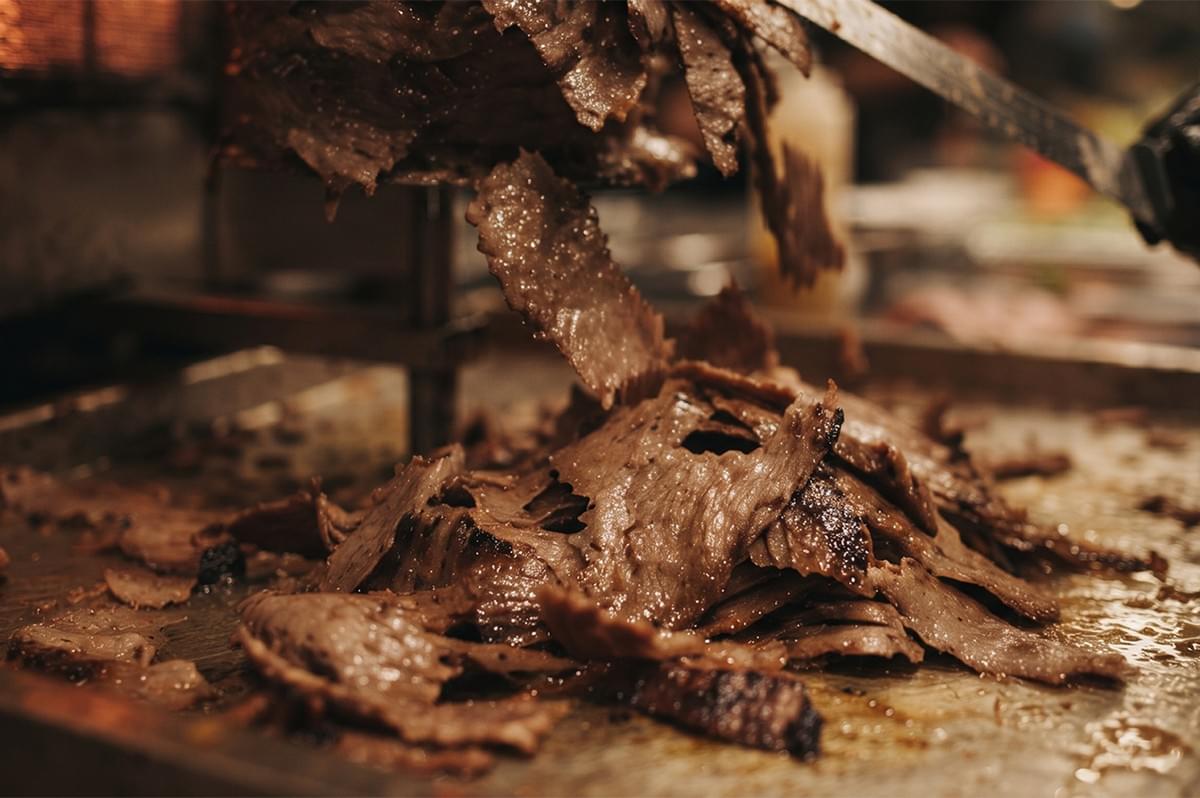
The original Bursa preparation is associated with lamb döner. Beef is common in modern versions, while chicken should be treated as a variation rather than the classic form. This döner style meat is shaved thinly to create the signature thinly sliced meat slices essential for the dish. Some places serve it with chicken instead.
Thin slicing matters here. Thin pieces catch the tomato sauce and butter drizzle, while thick chunks just sit on top. Because the meat is sliced thinly, cook it quickly and serve it immediately so it stays tender.
Home adaptations sometimes use ground meat, onion and spices or flatten the meat before chilling or freezing to imitate döner texture. That differs from the İskender family's classic preparation, which says its meat is seasoned only with salt.
Pita Bread and Pide Bread: The Base of Iskender Kebab
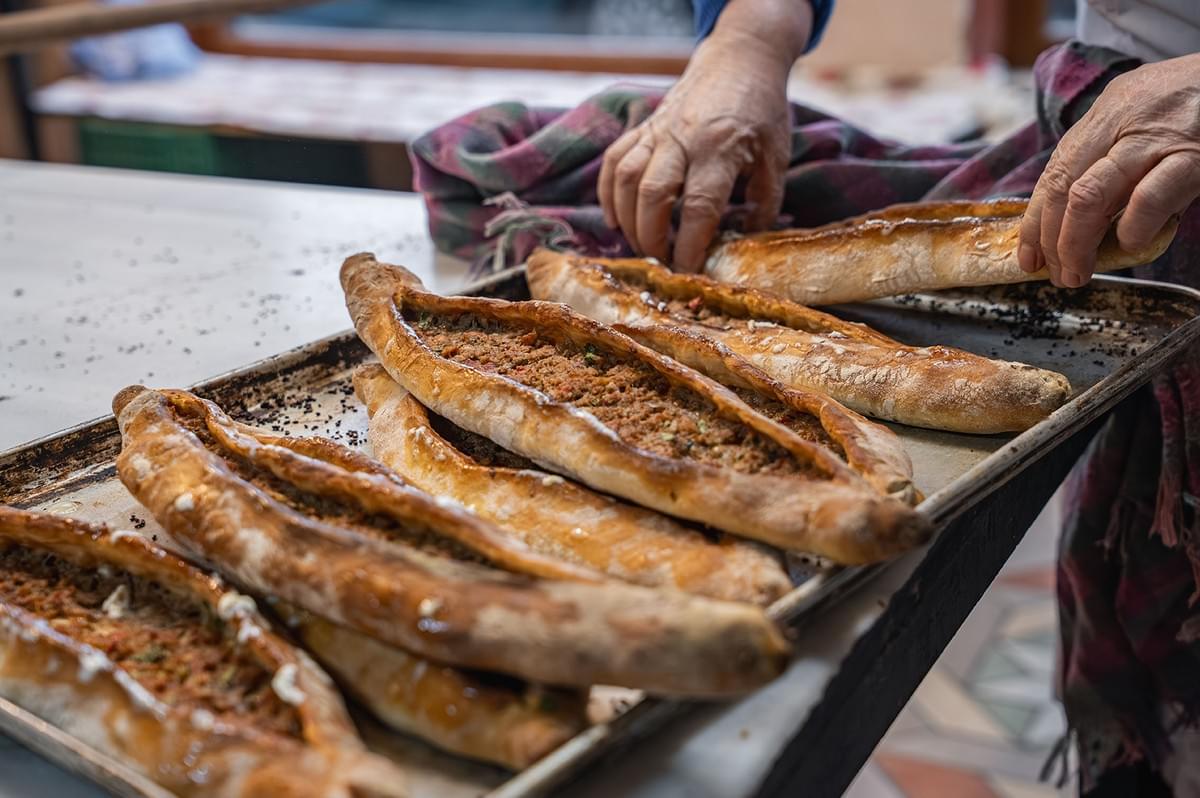
Turkish pide, traditionally tırnak pide, is cut into bite-sized pieces and forms the base of the dish. It's the base of the plate, and it's meant to soak up the rich tomato sauce and yogurt. By the end of the meal, the bread is almost the best part.
Some cooks toast the bread cubes in an air fryer or oven to get a nice char and prevent sogginess. Using parchment paper during preparation helps keep the bread from sticking.
Iskender Kebab Spicy: Adding Heat with Red Pepper Flakes
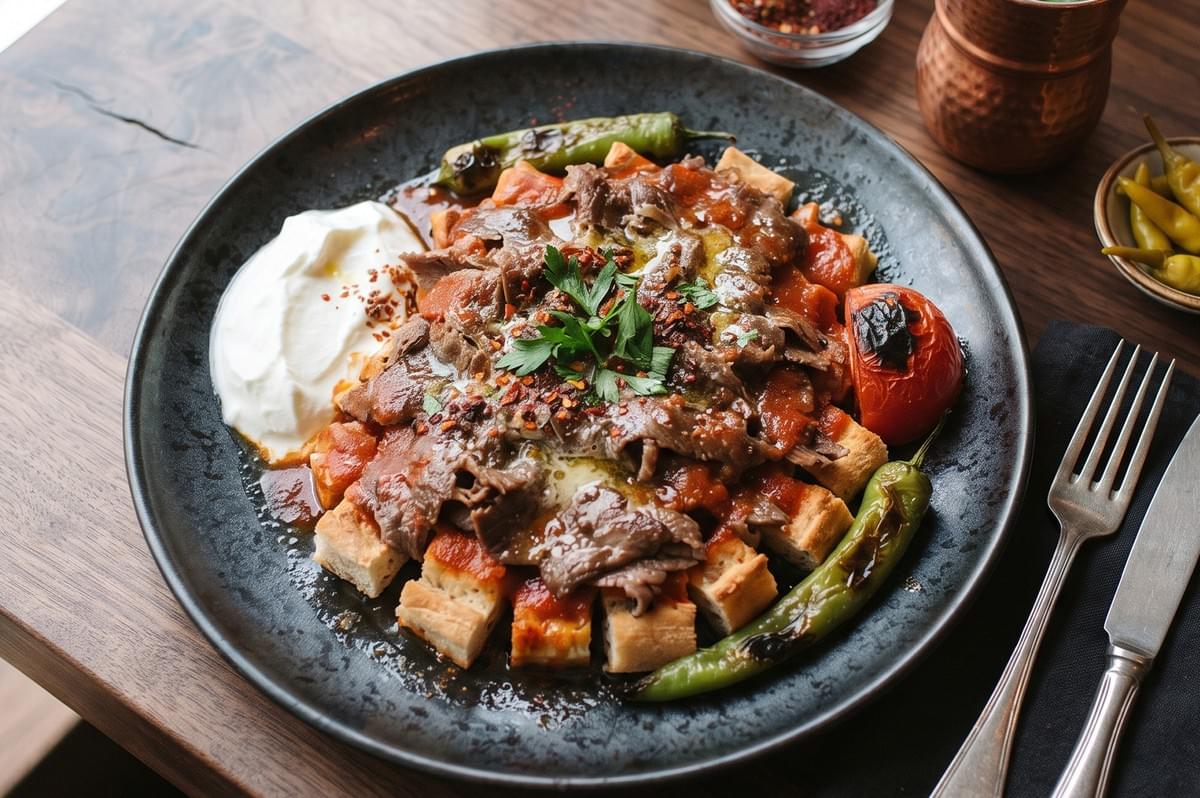
Iskender kebab is typically mild, but you can make iskender kebab spicy by adding red pepper flakes or Turkish red pepper paste to the tomato sauce. This adds a subtle heat that complements the tangy yogurt and hot butter perfectly.
Turkish Recipes: The Tomato Sauce and Yogurt Combination
A rich tomato sauce is key to the dish. A warm tomato sauce is spooned over the bread and meat, while plain yogurt is traditionally served alongside. Recipes for the sauce vary; red pepper paste and extra spices are best treated as home-style variations. This sauce and yogurt combination is typically served over the meat and bread.
The creamy yogurt adds a cooling contrast to the hot butter and spicy tomato sauce, making the dish balanced and flavorful.
More Turkish Recipes: Variations and Serving Suggestions
Iskender kebab has inspired many other recipes, including variations with chicken or beef. Regional adaptations may include different spices or preparation methods.
It is typically served with grilled green peppers and tomatoes, often cooked in a cast iron skillet to get a nice char. Serving with ayran, a salted yogurt drink, is a popular pairing.
Top Tip: Cooking and Serving Iskender Kebab
A top tip for cooking iskender kebab is to use high heat when searing the meat to get a nice char quickly without overcooking. Cook thin slices quickly in batches and assemble the dish immediately.
Serve immediately once assembled to keep the bread from becoming soggy. Store leftovers in an airtight container, keeping the sauce, meat, and bread separate.
Using a rolling pin and parchment paper can help when preparing the meat mixture thinly before cooking.
A Home-Style Iskender Kebab Recipe (Serves 4) — See Recipe Card
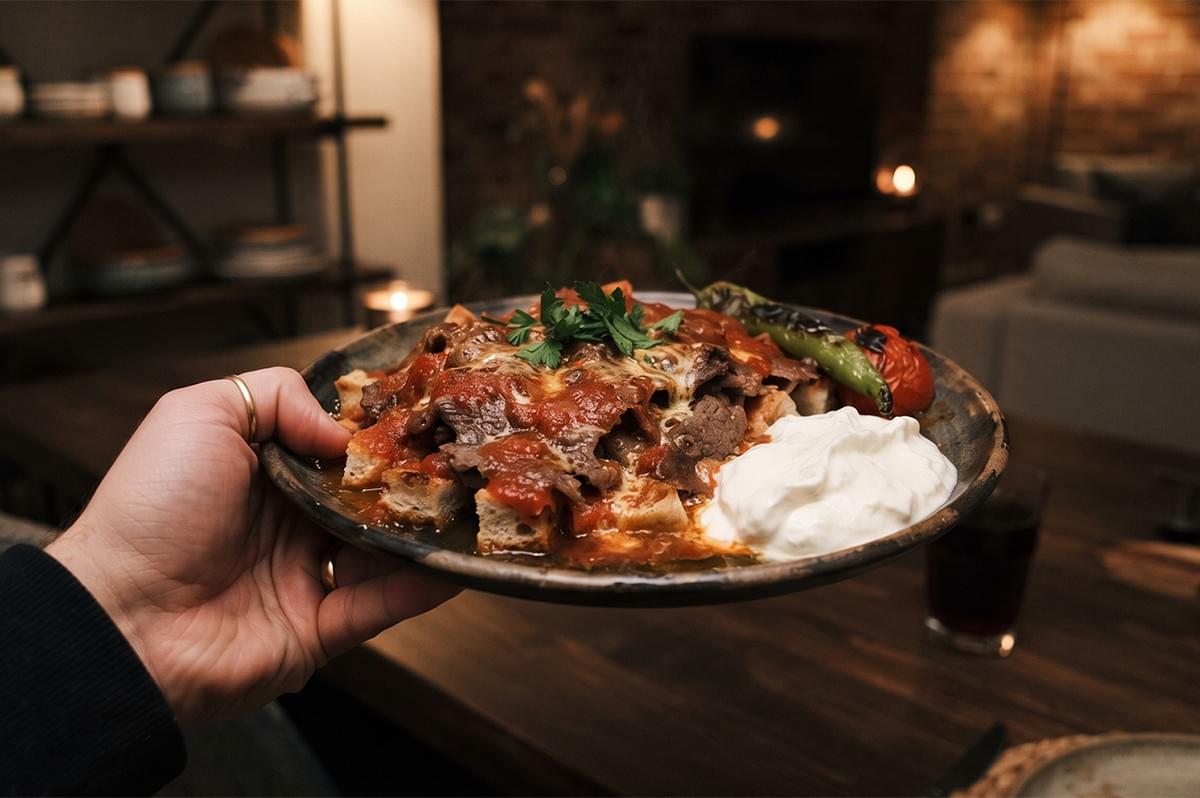
A quick note first. Most home kitchens don't have a vertical rotisserie or charcoal hearth. This is a home-style adaptation inspired by classic İskender kebab, designed for kitchens without a vertical döner spit.
For halal cooking, use halal-certified lamb or chicken. Check your butter and yogurt labels too.
Prep time: About 25 minutes, plus about an hour chilling the meat mixture Cook time: About 30 minutes
Ingredients
For the meat mixture
- Use 700 g lamb or beef sliced very thinly. Season/marinate it, chill it, then sear quickly in batches)
- 1 tsp salt
- ½ tsp black pepper
- 1 grated onion
- 1 tsp red pepper flakes (optional for iskender kebab spicy)
- 2 tbsp little olive oil
For the tomato sauce
- 2 tbsp butter
- 3 tbsp tomato paste
- 1 tsp Turkish red pepper paste (optional)
- 300 ml water or halal meat stock
- ½ tsp salt
- A pinch of sugar
For serving
- 4 pide or thick pita breads
- 500 g thick creamy yogurt (strained or Greek-style)
- 80 g butter, for the final hot butter drizzle
- 4 long green peppers and 2 tomatoes, for grilling (optional)
Method
- Prepare the meat. Combine the thinly sliced lamb or beef with grated-onion juice, salt, pepper, optional red pepper flakes and olive oil. Cover and refrigerate for at least one hour.
- Chill the meat mixture. Cover and refrigerate for about an hour to let the flavors meld and the meat rest.
- Prepare the tomato sauce. Melt 2 tbsp butter in a small pan over medium heat. Stir in the tomato paste and red pepper paste, cooking for 1 to 2 minutes. Add water or stock, salt, and sugar. Simmer for 8 to 10 minutes until slightly thickened. Keep warm.
- Prepare the bread. Cut the pide or pita bread into roughly 2.5 cm squares. Toast in an air fryer or oven with parchment paper to get a nice char and prevent sogginess.
- Cook the sliced meat in batches over high heat for about 1–2 minutes per side, taking care not to overcook it. Assemble immediately.
- Grill the sides. If using, blister the green peppers and halved tomatoes in the cast iron skillet.
- Assemble. Spread the toasted bread on plates. Spoon rich tomato sauce over it. Pile the hot cooked meat on top, then add more tomato sauce and a generous dollop of creamy yogurt.
- Finish with hot butter drizzle. Heat the 80 g butter until foaming and just starting to brown. Pour over each plate at the table while still sizzling.
Serving and substitution notes
- Chicken: Thighs stay juicier than breast. Cook slightly longer.
- Ground meat shortcut: Press seasoned minced meat into a loaf, bake, then slice thin.
- Butter: Butter is essential to the classic finish. The İskender family says its current version uses a special butter made with goat cream; regular unsalted butter is practical for home cooking.
- To drink: Ayran, a salted yogurt drink, cuts through the richness.
A Plate Worth Slowing Down For
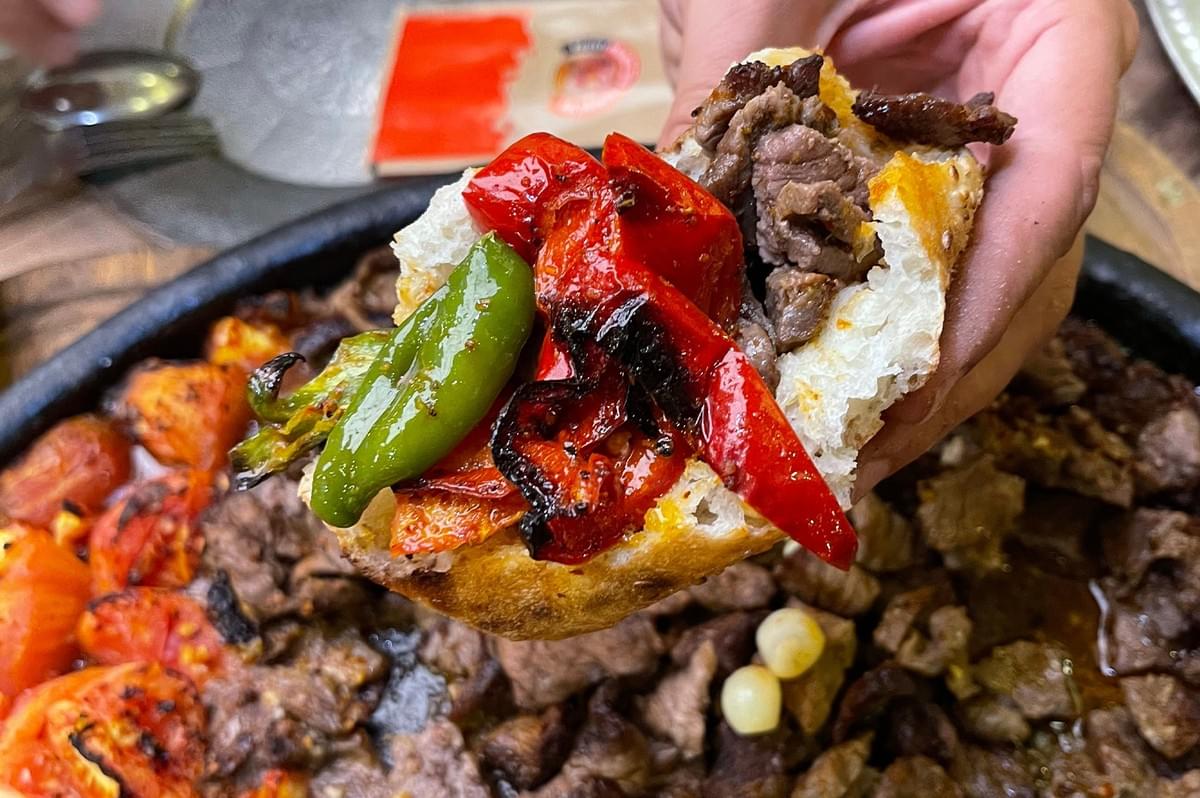
Iskender kebab started, as the family tells it, with one man wanting everyone at his counter to eat equally well. More than 150 years later, the idea still holds up. Good meat, honest bread, a simple rich tomato sauce, and hot butter poured while it's sizzling.
If you cook it at home, take your time with the slicing and seasoning. Don't rush the butter drizzle.
And if you find a Turkish kitchen near you serving it, order it and watch the pour. Then stay a while. There's plenty more in Turkish recipes and favorite dishes worth discovering after this.
If you are exploring one of the best Halal dishes, such as the Best Nasi Lemak in Singapore, you can visit the list through this ultimate guide article.
