

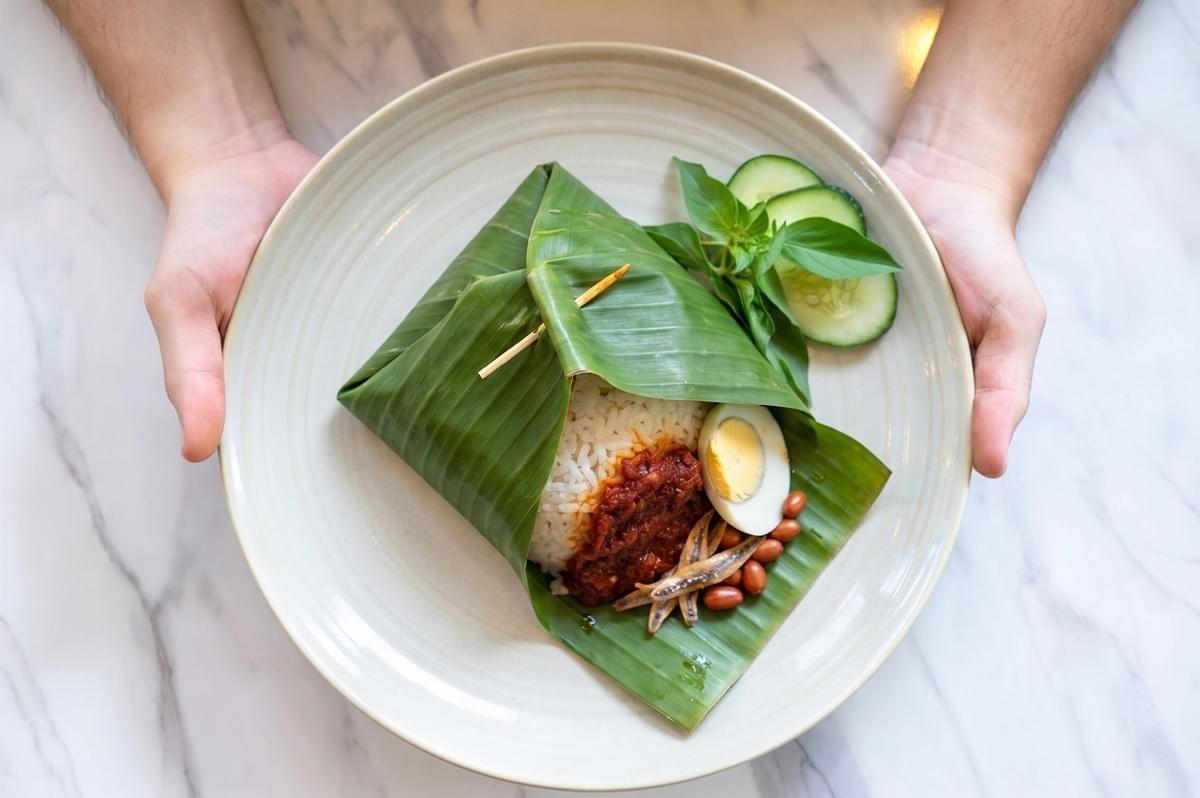
The first thing you notice is the smell.
Nasi lemak is Malaysia's iconic Malay dish: rice cooked with coconut milk and pandan leaves, traditionally served with sambal, anchovies, peanuts, boiled egg, and cucumber, often wrapped in banana leaf. Before you see the rice, before you unwrap the banana leaf, there is that warm rush of coconut milk and pandan leaves rising in the morning air.
It is the smell of a stall waking up, of an auntie ladling sambal nasi lemak onto fragrant rice cooked before the sun came up. For many who grew up in Peninsular Malaysia, that smell isn't food. It's memory.
I've eaten nasi lemak in a lot of places over the years. Air-conditioned cafes, roadside stalls with plastic stools, my own kitchen at midnight. And somehow the humblest versions, the ones wrapped tight in banana leaves and paper nasi lemak bungkus, are the ones that stay with me.
What "Nasi Lemak" Actually Means: Fatty Rice and Creamy Coconut Rice
The name is deceptively plain. In the Malay language, "nasi lemak" translates literally to "fatty rice," though nobody really means it that way. In everyday Malaysian food culture, "lemak" is taken to mean rich or creamy, referring to the rice cooked in thick coconut milk or coconut cream.
That creamy rice is cooked with freshly squeezed coconut milk and pandan leaves, sometimes with fresh ginger and fenugreek seeds added to enhance the fragrance. The pandan leaf gives it a green, grassy perfume that you can't quite name but always recognize.
It is, at heart, a simple technique. Long grain rice, coconut milk, pandan leaves. But simple things done with care tend to last, and this one has lasted a very long time.
Roots in the Rice Fields: Cooking Rice with Coconut Milk for Farmers
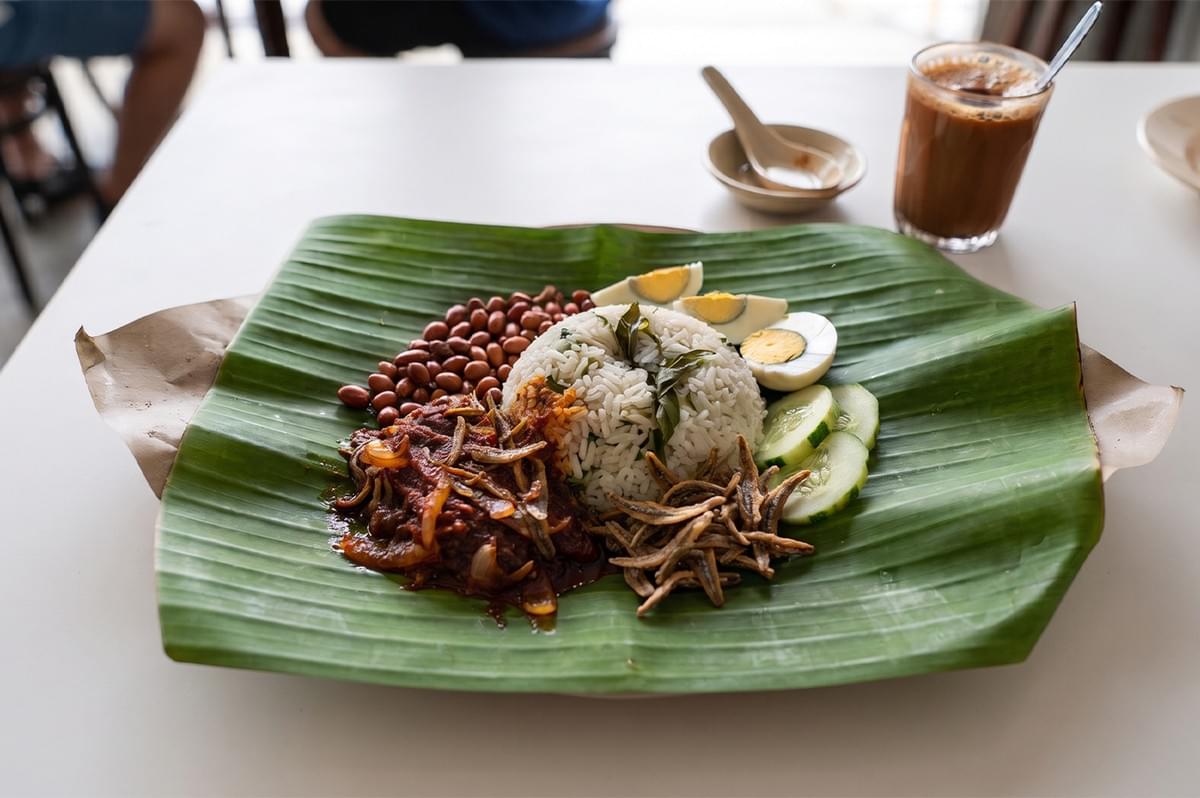
Food historians often trace nasi lemak back to Malaysia's agrarian past, to the farmers and fishing families who needed something filling before a long day of work.
The logic makes sense when you look at the ingredients. Coconuts from the trees, anchovies from the sea, eggs from the yard, and a little chilli paste to wake everything up. It was a meal built from what was close at hand, put together to give tired bodies enough to keep going until the afternoon.
What’s fascinating is how nasi lemak has remained a beloved staple across generations, evolving yet staying true to its roots. Imagine the farmers sitting down after a morning in the fields, unwrapping their banana leaf parcels filled with fragrant coconut rice, sambal, and crunchy anchovies and peanuts. That simple combination was more than just a meal, it was comfort and energy wrapped in leaves.
Even today, you’ll find nasi lemak at bustling hawker centers and roadside stalls, where the aroma of coconut milk and pandan leaves fills the air early in the morning. It’s a dish that connects people to their heritage and to each other, no matter where they are.
And while the core of nasi lemak is humble, the ways it’s served can be surprisingly diverse. Some regions add a splash of curry, others swap cucumber for kangkung (water spinach), and in Singapore, you might find it paired with crispy fried chicken drumsticks. These variations show how nasi lemak has become a canvas for local flavors, embracing creativity while honoring tradition.
The 1909 Record: Early Mentions of Nasi Lemak and Rice Cooked in Coconut Milk
The dish shows up in writing earlier than you might expect. It was mentioned as far back as 1875 in a French-Malay dictionary, and then more famously in 1909, in a book called The Circumstances of Malay Life by Richard Olaf Winstedt.
Winstedt, a British colonial scholar, described how Malay cooks boiled rice in coconut milk for festivals and weddings, and named the dish nasi lemak. So even a century ago, it was already woven into celebration and everyday life at once. A dish for ordinary mornings and for special days.
How a Breakfast Became a Nation's Dish: Nasi Lemak as Malaysia's National Dish
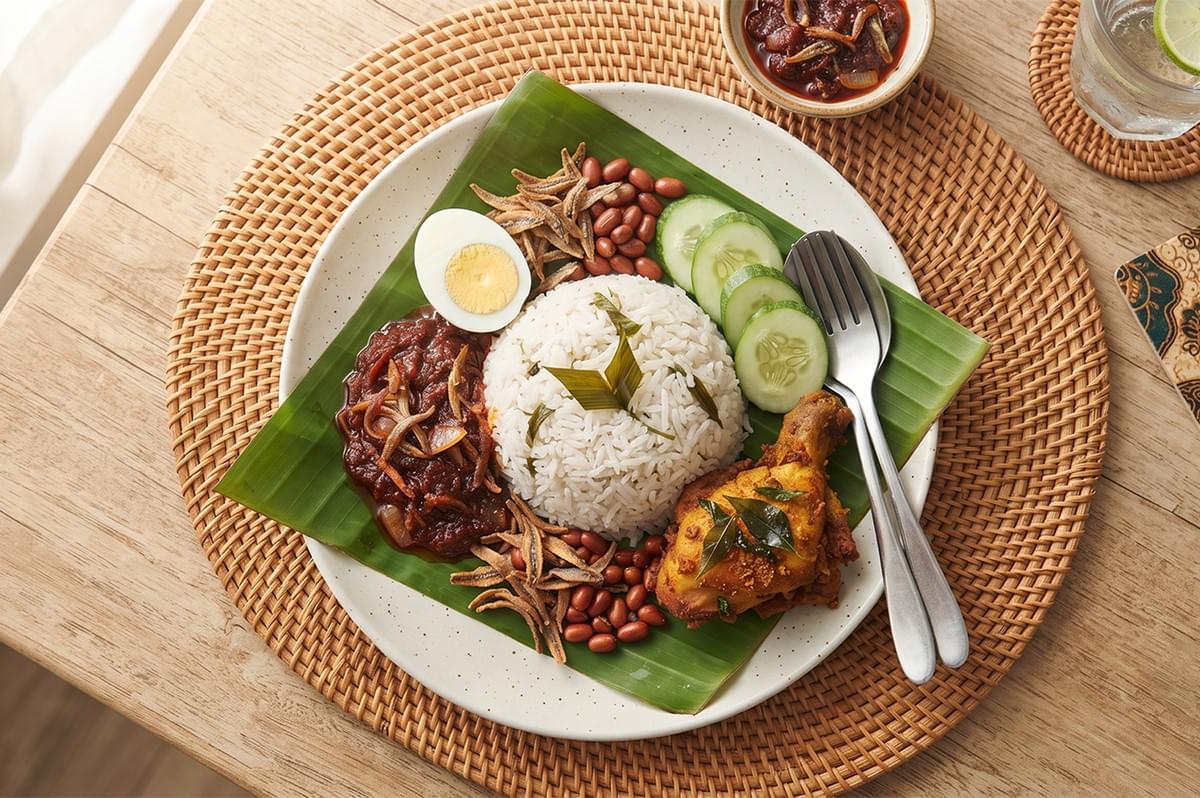
Somewhere along the way, nasi lemak grew beyond the kampung kitchen.
You can find it now across hawker stalls, roadside stalls, kopitiams, cafes, and even hotel buffets in Kuala Lumpur and beyond. It is sold ready-wrapped as nasi lemak bungkus, small parcels stacked on counters for a couple of ringgit, grabbed on the way to work. It is also plated up in fancier rooms, dressed with fried chicken wings or ayam goreng and served on ceramic.
Many Malaysians grew up knowing nasi lemak as the thing you eat nasi lemak without thinking, and that ordinariness is exactly what made it powerful. It became a common language at the table, understood by nearly everyone.
At home, cooks often follow a trusted nasi lemak recipe to prepare the perfect coconut rice, making sure to add coconut milk and pandan leaves for that signature aroma. Some use a food processor or blender to prepare sambal, while frying fried peanuts to add crunch to the dish.
Cooking the rice over medium heat or using a rice cooker ensures the rice is fluffy and creamy. For serving, a paper towel is handy to absorb excess oil from fried anchovies and peanuts, keeping the dish light and balanced.
Why the Plate Just Works: The Harmony of Sambal Tumis, Anchovies and Peanuts
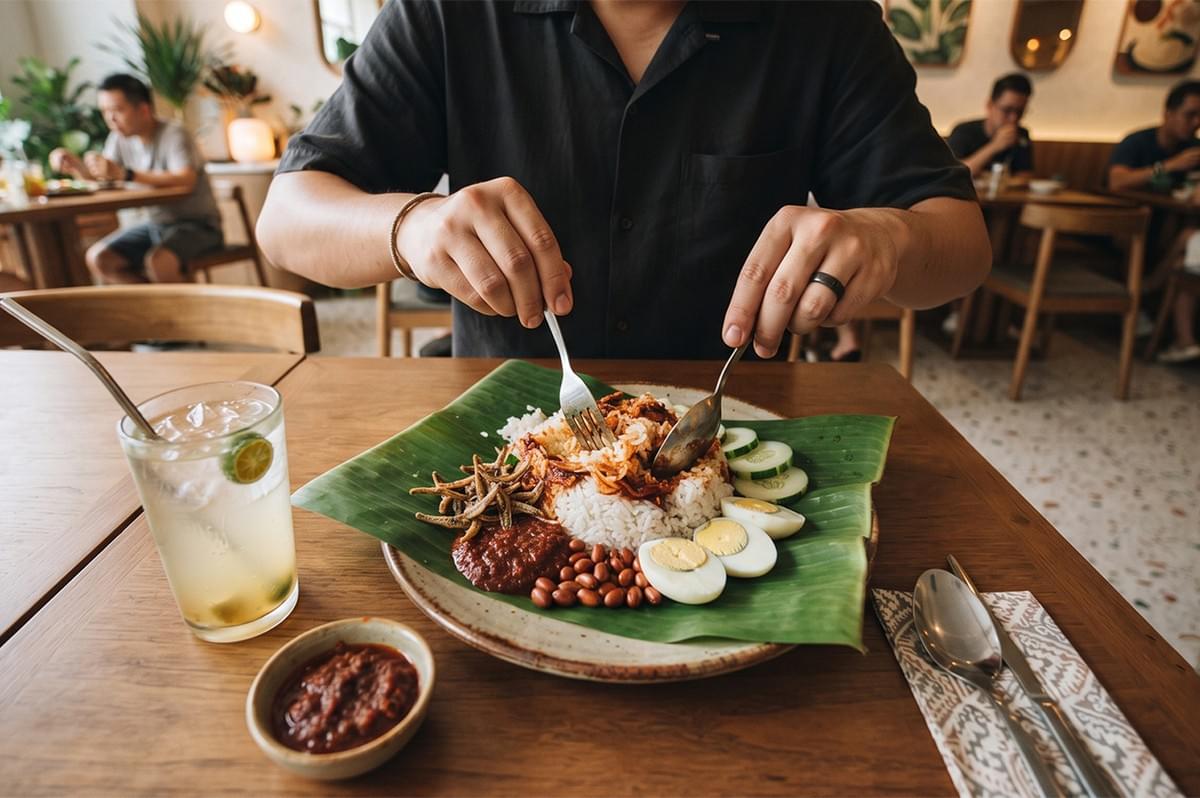
Strip away the history for a moment and eat nasi lemak slowly. You start to understand why this combination has held on.
The rice is soft and rich, coconut clinging to each grain. Then the sambal nasi lemak arrives, that deep red chilli paste called sambal tumis, and it brings heat and a little sweetness that cuts straight through the creaminess. The sambal is cooked with dried chillies, tamarind juice, palm sugar, and shrimp paste, fried until the oil separates — a technique known as pecah minyak in Malay.
The ikan bilis, the tiny fried anchovies or salted anchovies, add a salty crunch. The roasted peanuts echo that crunch with a rounder, nuttier note. A boiled or fried egg brings its own gentle richness. And then the cool, clean cucumber slices, doing the quiet work of settling the palate between bites.
Nothing on the plate is loud on its own. Together, they balance. Soft against crisp, rich against sharp, hot against cool. It is a small lesson in harmony, eaten with your fingers off a banana leaf.
A Dish Everyone Shares: Regional Variations and Side Dishes
What moves me most about nasi lemak is how it belongs to no single group.
It carries deep Malay roots, but it is loved across communities. The Malaysian Indian version often comes with chicken curry or fish curry. There are vegetarian renditions where the dried anchovies and shrimp paste give way to plant-based substitutes. Different hands, same heart.
You see it in the regional turns too. In Alor Setar, the rice can be tinted yellow and served with nasi minyak and curry, and in northern Kedah, nasi lemak is often served with curries. In Malacca, water spinach or kangkung sometimes stands in for cucumber. Up in Terengganu, fried fish like ikan selar kuning finds its way onto the plate. Each place claims the dish and quietly makes it their own.
A similar dish worth noting is nasi gurih, a coconut-rich rice from Aceh that reflects how closely related traditions travel across the region. Singaporean Chinese nasi lemak commonly features deep-fried chicken drumsticks.
That flexibility isn't dilution. It's belonging. A dish that bends to fit every table is a dish that truly feeds a country.
The Many Faces of Nasi Lemak Today: From Roadside Stalls to Rice Cooker at Home
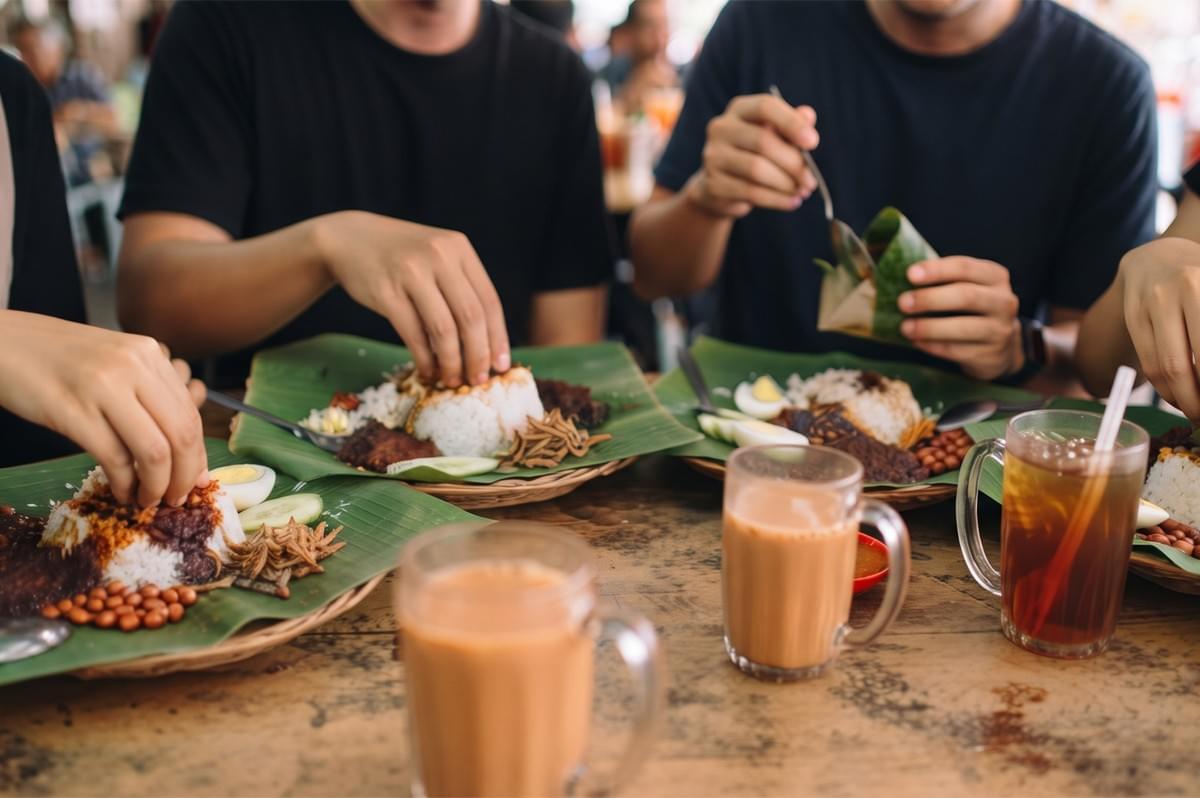
The core stays the same, but the sides keep growing.
Order it today and you might find crispy fried chicken wings beside your rice, or a dark, slow-cooked beef rendang, or sambal sotong with squid in a glossy chilli sauce. Some places pile on more. Some keep it to the plain, honest original: sambal ikan bilis, anchovies and peanuts, hard boiled eggs, and sliced cucumbers.
There are novelty versions now too, from nasi lemak sushi to nasi lemak burgers. I don't begrudge them. A dish this loved is bound to be played with. But I always drift back to the basic parcel, the one that tastes like a Tuesday morning and nothing more. In Indonesia, nasi gurih is a similar dish built around coconut rice rather than another novelty version.
At home, many cooks use a rice cooker to prepare the fragrant rice cooked in coconut milk, adding coconut cream or thick coconut milk for extra richness; if you are using canned coconut milk, shake it first, and some cooks prefer jasmine rice for a more fragrant result. Whether cooking rice by bringing the mixture to a simmer over medium-high heat on the stove before lowering it, or in a rice cooker, the key is to let the rice absorb all the coconut milk and pandan leaf aroma for that creamy rice texture.
To serve nasi lemak, put the rice and accompaniments together on one plate or in a banana-leaf parcel, as it is traditionally served as a complete set.
Nasi Lemak and Halal Food Culture: Comfort in Familiarity
For many who eat halal, nasi lemak sits in easy, comfortable territory.
The traditional Malay versions are built around halal ingredients, and the dish is a staple at Malay and Muslim tables across the region. That familiarity matters. It means you can order without a round of careful questions, without scanning for anything you'd need to avoid.
Of course, non-halal versions exist in some communities, such as those including luncheon meat, so it's still worth a glance at where you're eating. But at its Malay heart, nasi lemak has long been a dish that halal diners can reach for with confidence. It feels like home precisely because it asks nothing of you but your appetite.
Before Your Next Plate: Savoring the Story in Every Grain of Coconut Rice
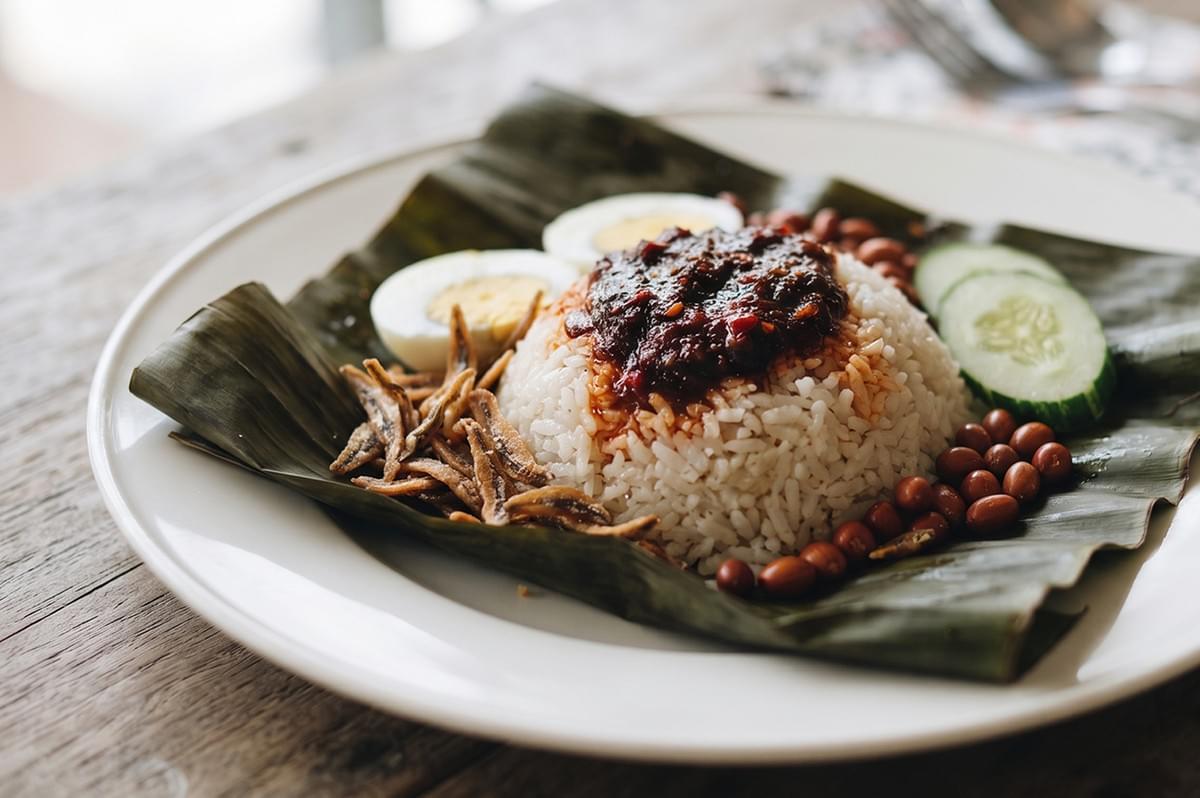
Nasi lemak has been called Malaysia's greatest culinary achievement, and maybe it is. But I think its real achievement is smaller and more human than that.
It fed farmers. It marked weddings. It became the thing you eat half-asleep before school, and the thing you crave when you're far from home. It carried a whole country's mornings in a folded banana leaf.
So the next time one lands in front of you, slow down for a second. Breathe in the coconut milk and pandan leaf. Notice the crunch of anchovies and peanuts, the heat of sambal tumis, the cool cucumber slices. Somewhere in that plate is more than a hundred years of ordinary life.
If this made you hungry, or homesick, keep it and share it with someone who grew up on this dish too. Then go find your own parcel of nasi lemak bungkus, and taste the story for yourself.
