

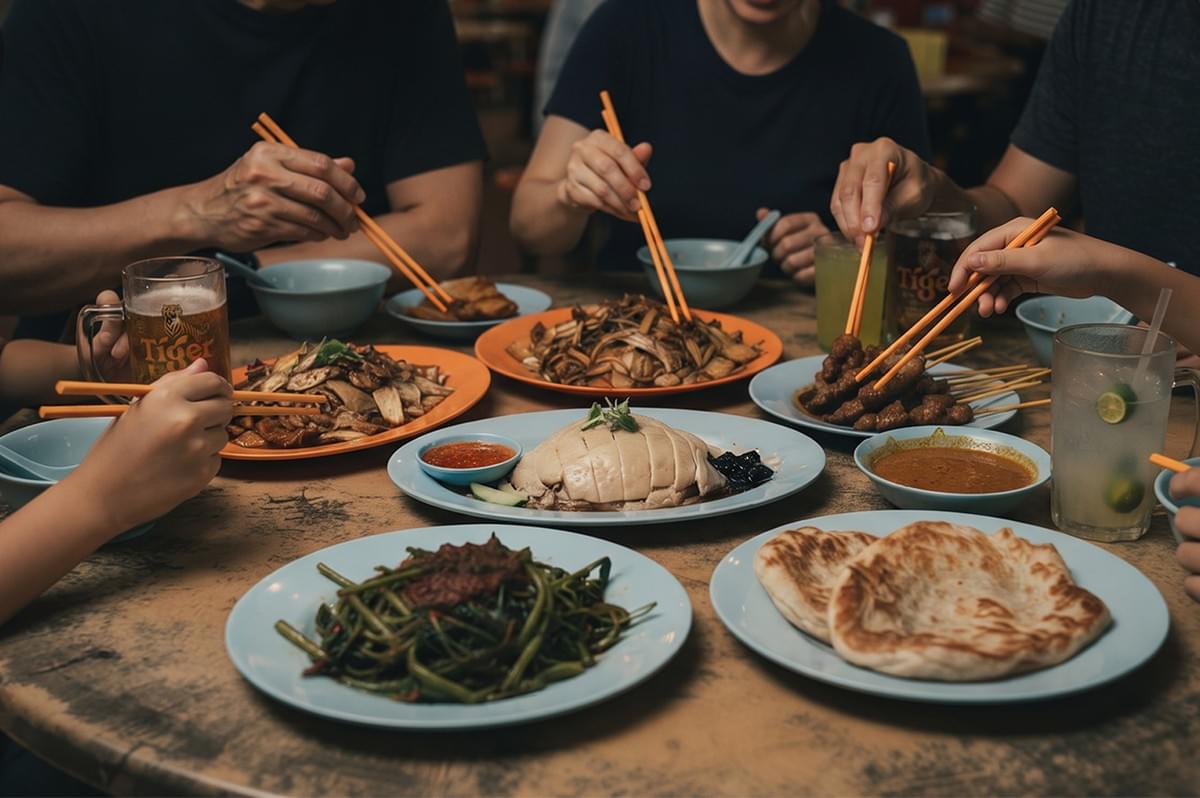
I return to that moment more often than I expect. It stays with me less for what was on the plate and more for what it taught me about sitting down with other people.
Halal is often mistaken for a cuisine. It isn't. It's a religious dietary framework, a set of principles about what is permissible and how food is prepared.
That's why halal food in Singapore can take so many shapes. It might be a bowl of noodles, a plate of roti prata, a basket of dim sum, or a grilled steak. The framework stays the same, but the flavours travel everywhere.
Singapore food culture is built on that kind of crossing. Our tables are rarely uniform. One person skips pork, another skips beef, someone else is eating vegetarian, and somehow the meal still comes together.
Here's what I've come to believe. Inclusion isn't just making sure there's one suitable dish on the table. A single halal option, pushed to the corner, can feed someone without ever making them feel part of the meal.
Welcome looks different. It's choosing a place where everyone can order freely. It's asking before you book, not after you've sat down. It's passing the shared plate around without anyone needing to explain themselves.
Those small acts rarely get noticed, and that's the point. When consideration is done well, it disappears into the meal. What's left is simply a table of people eating together.
I think that quiet thoughtfulness is the best part of Singapore food culture. It's not the queues or the viral dishes. It's the habit of making room.
So the next time you plan a lunch, a birthday dinner, or a casual catch-up, pause for a moment. Think about who's coming and what would let them relax the moment they sit down.
It doesn't take much. A question asked kindly. A place chosen with care.
Sometimes the most generous thing you can serve isn't on the menu at all. It's the feeling that you belong at the table.
